CPD that supports you in practice: why we are changing our requirements
Share this post

Share this post
By Fiona Browne, Director of Standards, Education and Development
As many of you reading this will know, in early 2025 we asked the profession and patients, as part of a public consultation, for their views on changes we wanted to make to the CPD scheme. More specifically, changes to the guidance we publish to support osteopaths to meet the requirements of the scheme. We also suggested adding new required elements to the scheme, informed by the data from patient concerns about osteopaths.
Fast forward to now, and we are getting ready to launch these new required elements of the scheme, and to publish the updated and more accessible guidance. We’ve listened to feedback from osteopaths, asking us to make things simpler and more tailored to different styles of learning. We’ve also listened to patients, which is why we will soon be requiring osteopaths to do CPD in the areas of inclusive practice, and professional boundaries.
Once introduced, the new elements will apply from osteopaths’ next CPD cycle onwards. To explain more about these changes I wanted to share a shorter, slightly updated version of something I originally wrote for Osteopathy Today magazine in 2025.
Our CPD scheme is based both on peer discussion and in principles of engagement, support and community. We want osteopaths to engage with the scheme, get personal and professional support from colleagues and build networks to support ongoing high quality patient care.
The CPD scheme supports not just maintaining knowledge and skills, but developing practice to respond to the needs and expectations of patients and the wider context; whilst consistently demonstrating expected standards which provide the framework for safe, ethical and competent holistic osteopathic care.
Every day, osteopaths use their professional judgement to tailor care to the individual patient in front of them. Most of the time, these interactions go well. Patients consistently tell us about the positive difference osteopathic care makes to their lives.
And as the regulator, the GOsC has a unique view of osteopathic practice. We hear from patients, but we also hear from osteopaths, educators and others across the profession. We see examples of excellent care, but we also see situations where things have sadly gone wrong. While we do provide free support through our Independent Support Service, we know that this process can be difficult for everyone involved.
Part of our role as a regulator is to share those insights and to take action to avoid harms both for patients and osteopaths, for example in professional boundaries and inclusive practice.
We get concerns about boundary breaches, and we find that miscommunication and assumptions sit underneath many of the concerns reported by patients. Two people can experience exactly the same interaction very differently.
Culture, personal history, previous experiences of healthcare, trauma, expectations and many other factors influence how we communicate and how communication is received or understood. Something that feels routine to an osteopath may be completely unfamiliar or bring up unexpected feelings to a new patient.
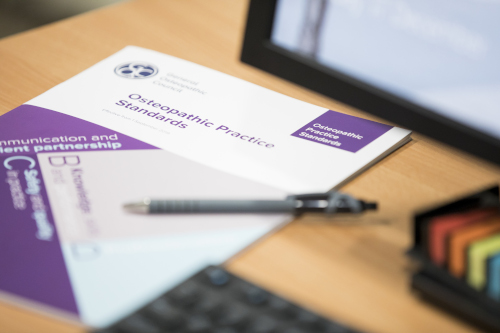
The Osteopathic Practice Standards are clear about the importance of professional boundaries and inclusive practice, and state:
But applying standards in practice isn’t always straightforward. Consider a few everyday situations:
There won’t necessarily be one simple answer to every situation. Context matters. What is important is having the confidence:
That is exactly the kind of learning we want CPD to support.
When we discuss example clinical scenarios with osteopaths, there are often different views about the right response. We see that as valuable. Talking through a difficult situation with others can help us notice something we might have missed. Hearing another perspective can challenge assumptions. Reflecting afterwards can help us respond differently next time.
These three stages can provide a useful approach to discuss with others:
Where we can, we would much rather help prevent problems arising in the first place to support high quality osteopathic care. That means sharing what we learn from our regulatory work, supporting open conversations about possibly challenging areas of practice and creating resources that osteopaths can use individually and with colleagues.
Professional practice is complex and we recognise that. Remaining curious, reflecting and being willing to learn with others regularly can provide a scaffold to support good quality care.
Over the coming weeks we will share more about the new CPD requirements which will come into effect in your next three-year CPD cycle. We will also share practical resources and learning opportunities to support learning around professional boundaries and inclusive practice.
Our aim is simple: to use our insights to tailor mandatory CPD requirements to help you in your practice, support professional judgement and, ultimately, to support osteopaths and patients in safe, high-quality and compassionate osteopathic care.
Keep an eye out for an email from us with the new CPD Guidance with more resources to support you.
NB: This article has been supported by the use of artificial intelligence but the final draft has been finalised by a human. A longer version of this article by Fiona Browne appeared in Osteopathy Today in October 2025.
Share this post
Nikky Godfrey, Interim Head of Education at the professional membership body the Institute of Osteopathy and Executive Administrator of the Council for Osteopathic Educational Institutions On 4 July 2026, educators…
Following the publication of the latest annual concerns report from the National Council for Osteopathic Research, Fiona Browne, Director of Education, Standards and Development reflects on the nature of concerns…

Fiona Browne, Director of Education, Standards and Development, explains how the GOsC is working collaboratively to support the future of osteopathy in the UK.