
Key statistics and information
We publish financial information for each Council meeting, broadly in line with our financial quarters.
The latest published figures cover April and May 2026, the first two months of the 2026-27 financial year. June 2026 is not included because the timing of the July Council meeting did not allow a complete quarter to be reported.
Our financial year runs from 1 April to 31 March. The next financial update is scheduled for publication in November or December 2026.
Financial updates are presented in the public sessions of Council and are available for anyone to view. Our complete financial statements are published in our Annual Report and Accounts.
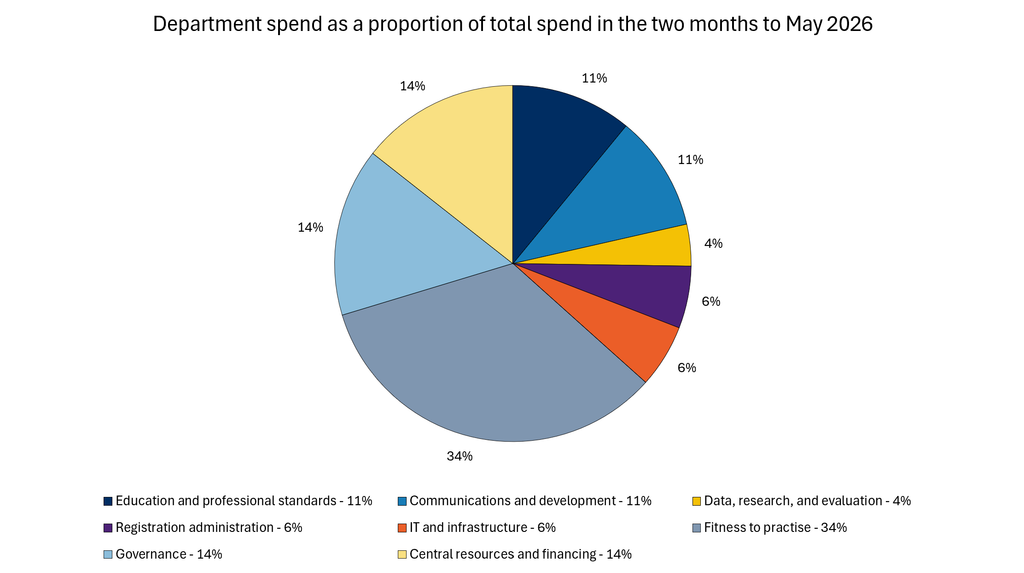
Expenditure for the first two months of the year.
Recent expenditures include the cost of Fitness to Practise hearings and on the website project.
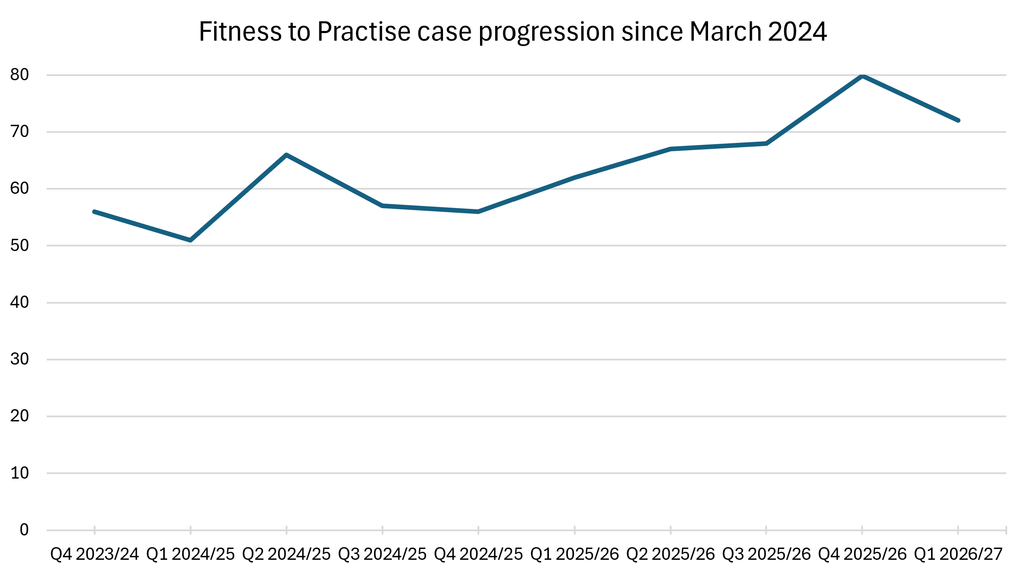
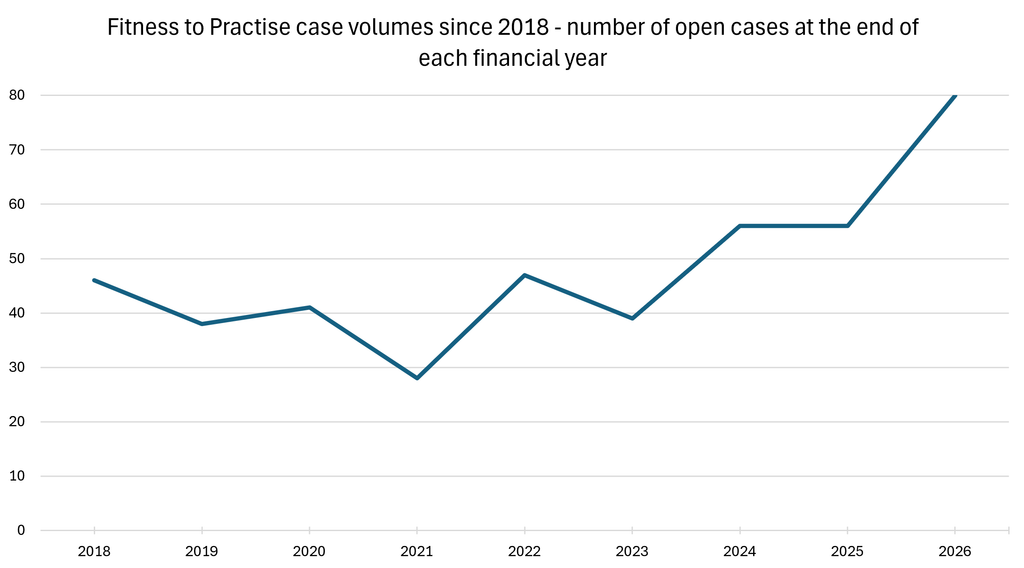
Since the year end, open Fitness to Practise case levels have dropped slightly; a quarterly trend since March 2024 is shown below. However, be aware that the recent case level is still significantly higher than it has been historically, and that a lot of the cases are of a more complex nature, which requires longer hearings compared to less complex cases, and the associated costs that come with those more involved cases.
The value proposition section is presented every year in the Annual Report and Accounts, and shows how much is spent each of the proposition’s three components, with an indication of how much of the £570 headline registration fee is spent on each component:
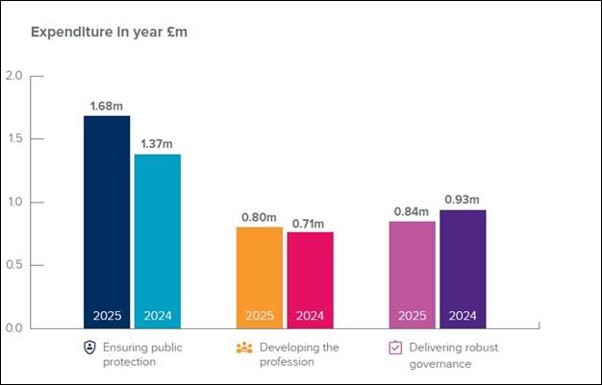
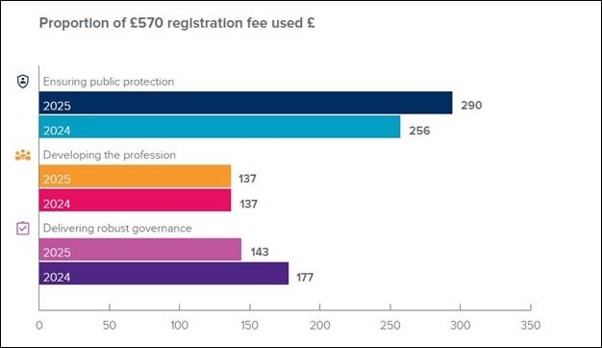
The three components of the value proposition are predominantly comprised of:
- Ensuring public protection – salary costs from Regulation and Registration teams, keeping the Register up to date, Fitness to Practise costs including hearings and legal costs associated with regulation activities, quality assurance and boundaries research.
- Developing the profession – salary costs from Communications and Professional Standards teams, website running costs, costs associated with the provision of access to medical journals for all registrants and penultimate and final year students, CPD, graduate outcomes for Pre-Registration Education & Training and Osteopathic Practice Standards.
- Delivering robust governance – salary costs from central functions (IT, Resources, HR, Governance), other IT costs (Software licences, IT security, CRM system, and other infrastructure costs), costs to run GOsC Council and its Statutory Committees, and other central costs such as financing, deprecation, and non-salary-related staff costs.
An overview of each department’s spend is shown below, as a proportion of the total expenditure of £3.6m, as shown in the Annual Report and Accounts. Please note that this figure includes planned spending from designated reserves.
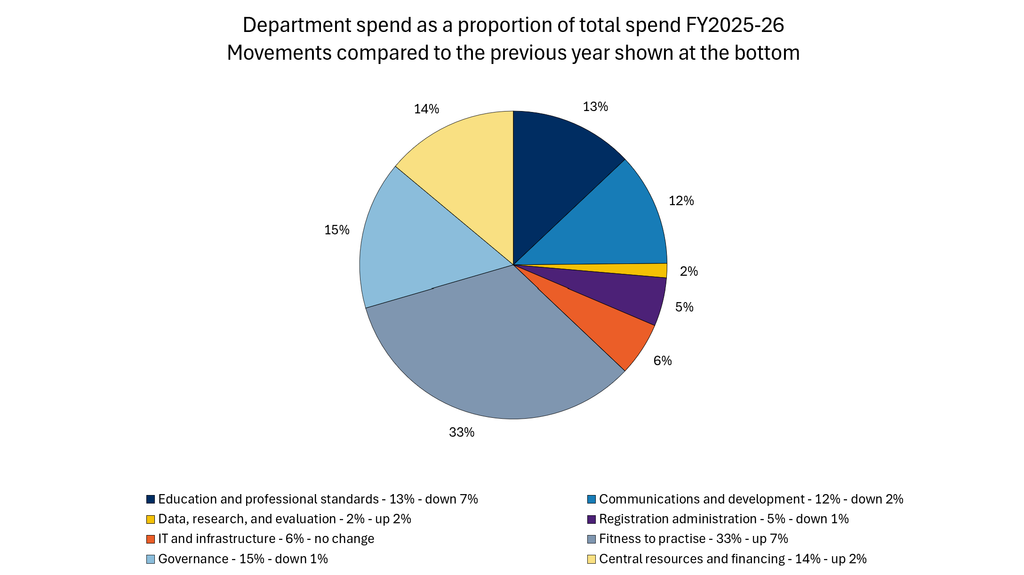
Comparing to the previous year, one of our successes was to bring the Quality Assurance of education providers in-house. In the year to March 2026 this saw a 61% reduction in costs for Quality Assurance work; this is expected to continue as we progress through the new financial year. We are expecting this project to bring savings of over £250k across five years.
We have also saved £140k on external legal costs across the last two years on Fitness to Practise cases by not sending out investigations to be undertaken externally; these investigations have been brought in-house.
Other cost efficiencies across the organisation have generated £56k of savings, in areas such as IT, Research, and Communications. The new CRM is also expected to bring greater efficiency to Registration processes.
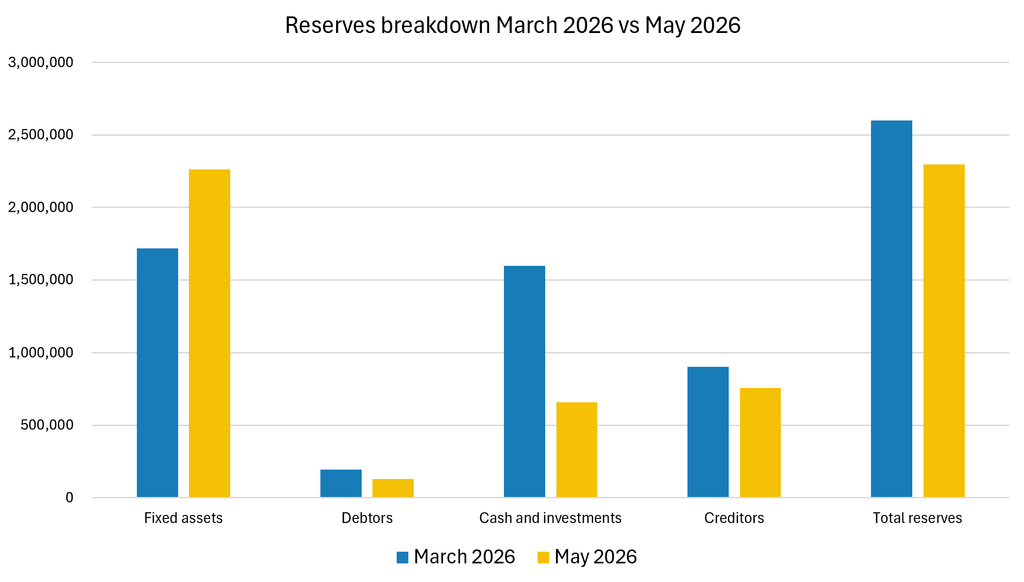
In terms of our balance sheet, the following graph shows how much of our reserves were tied up in Fixed Assets, £1.7m of the total reserves figure of £2.6m.
The sale of Osteopathy House has converted a significant level of our reserves to a more readily available “liquid” position, whereas previously much of our reserves were held in property, which can be very difficult to extract cash from in times of urgent need.
Another benefit of selling the building was to bolster our overall reserves, which ensures we can meet Council’s requirement to hold 8-9 months of expenditure in reserve:
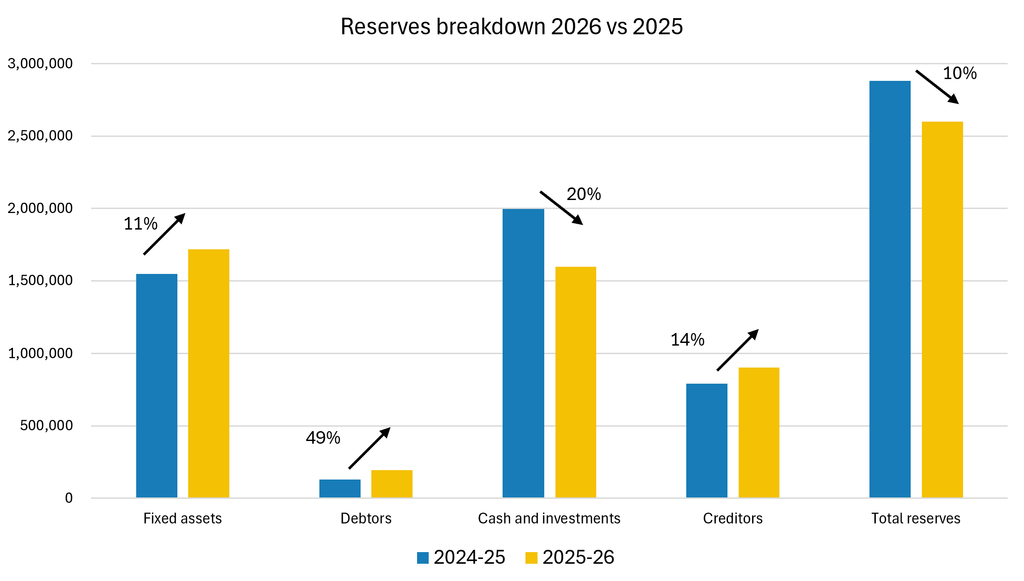
The fall in total reserves, cash, and investments in the year reflects the level of spend the organisation has seen in the last 18 months. The increase in fixed assets reflects the major IT projects recently completed (the new CRM system and the website redevelopment).
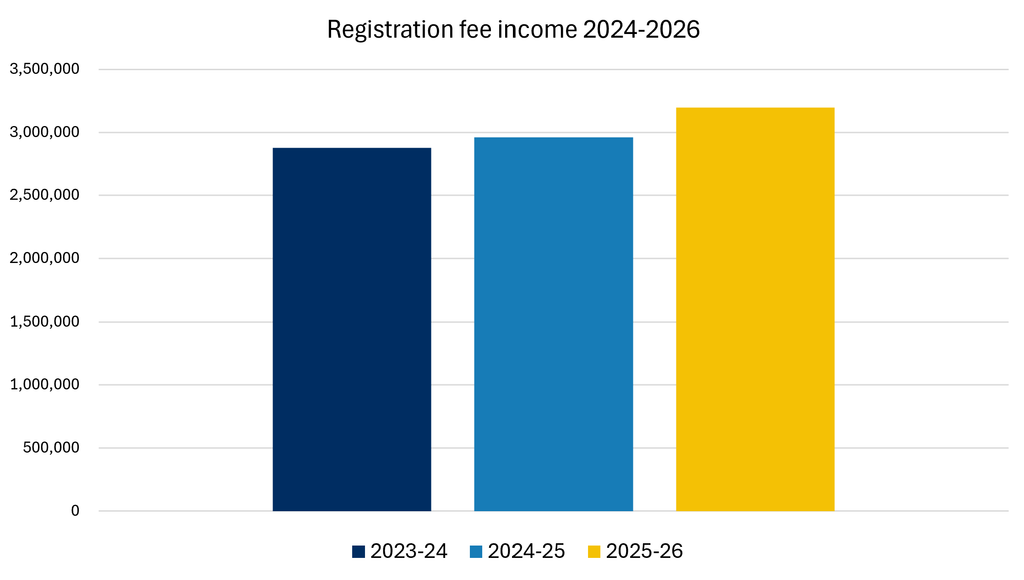
Income levels have largely remained stable for the last few years, as shown below;
Fitness to Practise (FtP) caseloads have increased markedly in the last few years, as shown below. This represents a 43% increase in the last year, and a 105% increase since 2023, after a few years of relative stability:
Costs to run the Regulation department have also tracked higher in recent years to reflect the increased caseload:
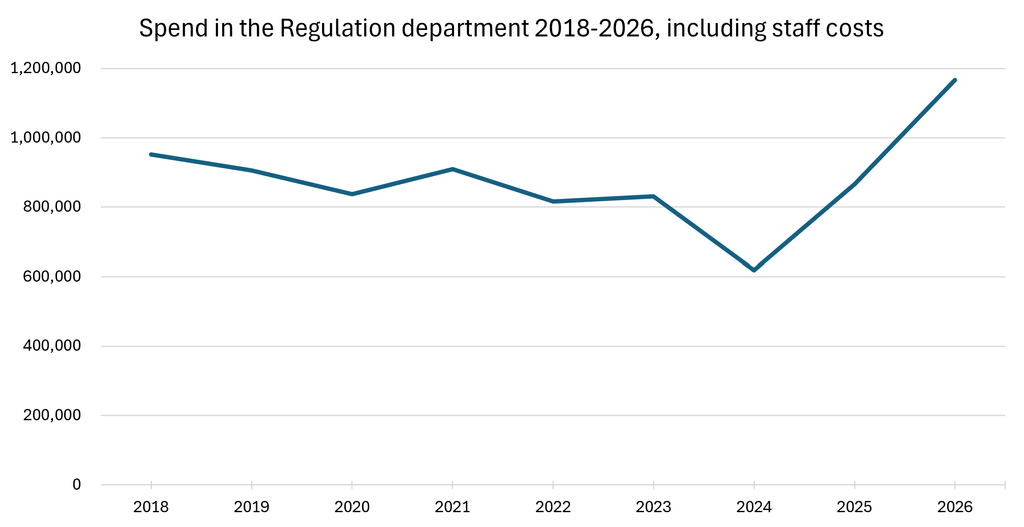
The Regulation department accounts for a third of the expenditure of the GOsC, by far the largest share of any department.
Find more financial information in our Annual Report and Accounts. The 2025-26 Annual Report and Accounts will be published in October 2026.