Our role and purpose
The General Osteopathic Council (GOsC) was established by the Osteopaths Act 1993 to ‘develop and regulate the profession of osteopathy’.
The overarching objective of the GOsC is the protection of the public. This involves working towards the following objectives:
- protecting, promoting and maintaining the health, safety and wellbeing of the public
- promoting and maintaining public confidence in the profession of osteopathy
- promoting and maintaining proper professional standards and conduct for members of that profession
Our statutory role to ‘regulate and develop’
Our statutory role is set out in law (the Osteopaths Act) and includes both regulating and developing the profession for public protection.
Public protection is not only about responding when things go wrong. We also protect the public by supporting high standards of education, continuing professional learning and innovation, so that concerns can be prevented wherever possible.
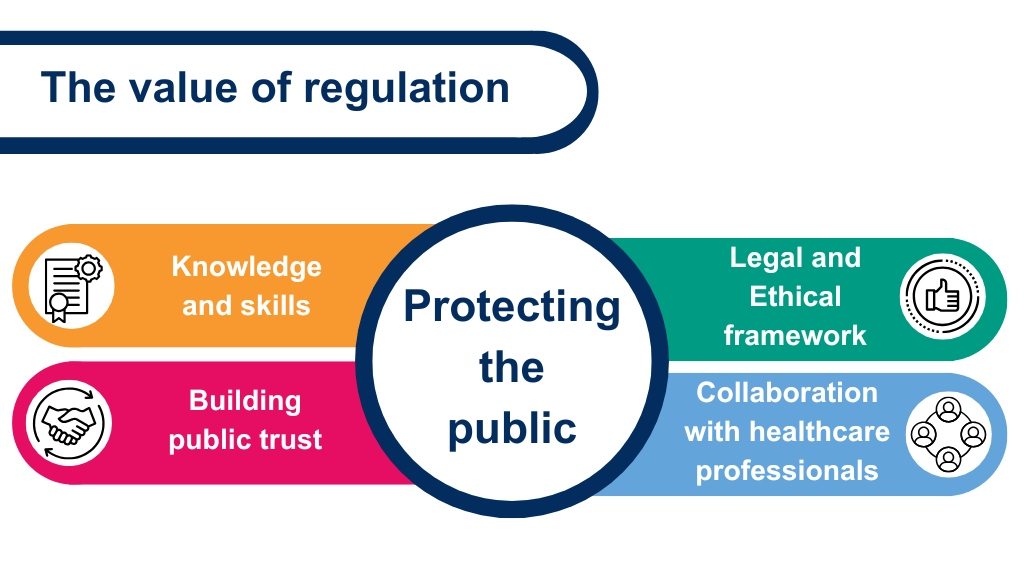
This is the value of regulation – protecting the public by making sure that osteopaths maintain their knowledge and skills, work within a legal and ethical framework, collaborate with other osteopaths and other healthcare professionals, and help build and maintain public trust in osteopathy.
How we regulate the profession
We set the standards that osteopaths must meet, maintain the Register of osteopaths, and check and assure the quality of undergraduate education and training. We also take action when concerns are raised about osteopaths, and about those calling themselves osteopaths without being on our Register.
Examples of our regulatory work include:
- Maintaining the public Register of osteopaths
- Setting, maintaining and reviewing standards of practice and professional conduct
- Checking and assuring the quality of osteopathic education to make sure students can meet professional standards when they graduate
- Investigating fitness to practise concerns
- Protecting the osteopathic title by investigating concerns of those using the title when they are not on our Register
- Taking action where patient safety is at risk
How we support the development of the profession
Protecting the public also means helping ensure osteopaths can continue to provide safe, effective care in the future.
We support this by working to maintain high standards throughout an osteopath’s career, encouraging learning and improvement, using evidence from concerns and research to inform our work, and providing guidance to help ensure the profession is equipped to meet evolving patient needs.
This development work is part of our role as the regulator for osteopathy and is focused on supporting public protection, professional standards and patient confidence.
Examples of our development work include:
- Setting standards that osteopathic education providers must meet
- Supporting osteopaths to meet the requirements of our continuing professional development scheme
- Using findings from research and learning from concerns to inform standards and the requirements of the CPD scheme
- Collaborating with educators and partner organisations on current and future challenges and opportunities across the profession